
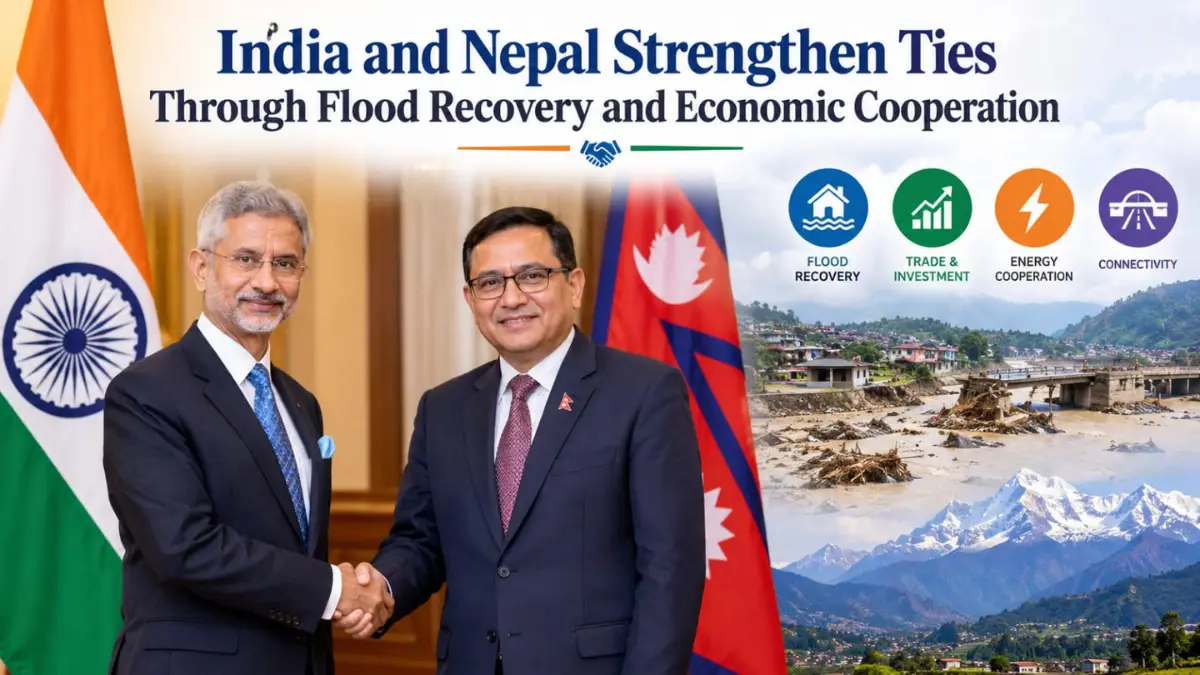
India and Nepal have discussed the post-flood reconstruction, the economic cooperation and the ways to strengthen the bilateral relations during the recent visit by the Nepal Finance Minister Mr. Swarnim Wagle to New Delhi. The discussions were held at a critical time for the Nepal, as it is facing an extensive damage from the devastating flash floods of August 26 and is seeking the international support for the rebuilding.
Mr. Wagle met the Indian External Affairs Minister Mr. S. Jaishankar and the Finance Minister Ms. Nirmala Sitharaman during his visit to the New Delhi. Mr. Jaishankar expressed the condolences over the loss of the lives and the property and held the discussions for strengthening the cooperation between the two countries, particularly in the areas of the economy, the energy and the connectivity.
Nepal Seeks Support for Post Flood Reconstruction
The disaster that occurred on August 26 in Nepal caused an extensive destruction, and has affected the homes, the roads, the bridges and the hydropower plants, thereby causing a massive damage to the economy and the infrastructure of the country. The Bhotekoshi River carried the floodwaters to the downstream after the disaster near the Nepal -Tibet border, and caused the widespread damage.
According to the figures reported by the Nepali authorities in the mid of the September, more than 1,400 people had died and around 6,150 are still missing. Also, more than 13,700 people had been rescued in the rescue operations.
For the reconstruction of the infrastructure that has been damaged during the disaster, requirement is expected to run into billions of dollars. Nepal has estimated that the rebuilding could require up to $5 billion, increasing the importance of the assistance from the neighbouring countries and the multilateral institutions.
During his meeting with Ms. Nirmala Sitharaman, Mr. Wagle sought the support from India for rebuilding the infrastructure damaged by the floods. The discussions also covered the economic cooperation and the ways to accelerate the bilateral projects.
Focus on Economic and Connectivity Cooperation
The talks between Mr. Wagle and Mr. Jaishankar also placed a considerable emphasis on the economic, the energy and the connectivity cooperation.
Nepal is interested in improving the connectivity through the road and the rail links, while the discussions also touched on the trade, the investment and the people-to-people exchanges. Kathmandu has additionally sought the progress on the arrangements concerning the flights to the Nepali airports, which remained pending for a long period of time.
One of the most sensitive issue is the connectivity to the Gautam Buddha International Airport at the Bhairahawa, near the Lumbini, and the Pokhara International Airport. According to the newspaper report, Nepal has faced the financial difficulties in meeting the debt obligations associated with these airports because of the absence of the required permission for certain bilateral flight operations. Improved air connectivity has therefore emerged as an important component of the broader economic relationship between the two neighbouring countries.
Nepal Looks for Multilateral Assistance
The recent visit by Mr. Wagle to India is also the part of the wider efforts of Nepal to mobilise the international support for the reconstruction of the damaged infrastructure. According to the report, the Nepal plans to appeal for the multilateral assistance at the United Nations General Assembly in the New York.
Mr. Wagle will also engage with the international institutions including the Asian Infrastructure Investment Bank and the International Monetary Fund during his meetings in the Bangkok. These engagements indicate that the Kathmandu is looking beyond the bilateral assistance as it assesses the financial requirements of the post-disaster reconstruction.
A Reset in India Nepal Relations
The discussions also come against the backdrop of the efforts to improve the bilateral relations between India and Nepal .
According to the newspaper report, the Nepal government under the Prime Minister Balendra Shah has maintained a positive approach towards its engagement with the New Delhi since he took the office in the March, 2026, although the relations experienced some uncertainty earlier in the year. The Foreign Secretary Mr. Vikram Misri’s proposed visit to Kathmandu in the May, 2026 was cancelled amid the concerns on the part of the Nepal.
The relationship subsequently gained momentum following a visit to New Delhi in June, 2026 by the political leader of Nepal Rabi Lamichhane, who met the Indian Prime Minister Narendra Modi.
The recent meetings therefore combine the immediate disaster-recovery requirements with the broader efforts to strengthen the bilateral economic and the strategic cooperation.
Trade Energy and People to People Links
Both sides have engaged in discussions for strengthening the economic ties and also for improving the connectivity to support the bilateral trade, investment and the people-to-people exchanges. Nepal has also expressed its interest in resolving the outstanding issues concerning the flights to its international airports.
The flood disaster has added an urgency to these discussions. The humanitarian assistance provided by India during the rescue and the relief operations has been acknowledged by Nepal, while the two governments are now looking at the long-term reconstruction and cooperation, thereby improving the bilateral ties.
For Nepal, the immediate priority is to rebuild the infrastructure and to secure the financial resources required for the recovery. However, for both the countries, the ongoing engagement provides an opportunity to address the connectivity, the energy, the trade and the investment issues alongside the reconstruction of the infrastructure lost in the disaster. The recent meetings thus place the post-flood recovery and the broader India- Nepal relationship on the same diplomatic agenda, with the economic cooperation and the connectivity emerging as the key areas for further the engagement.