
Simplified GST Registration and Refund Procedures
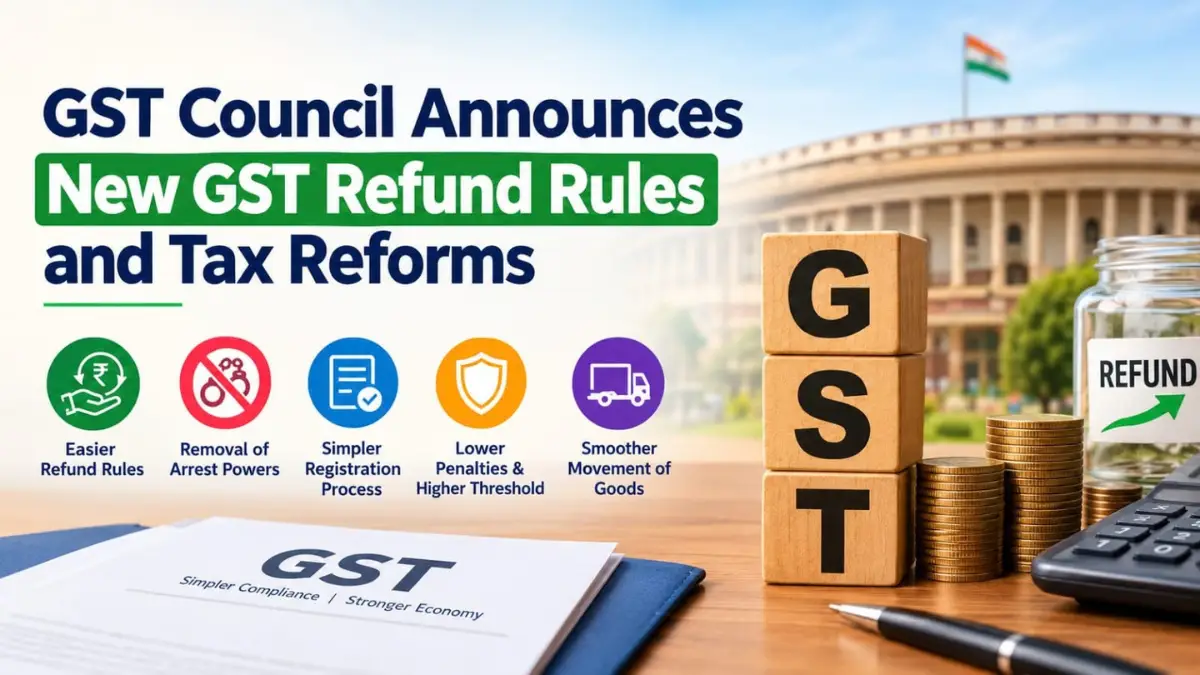
The GST Council on Thursday in its 57th meeting, has approved the measures to make the registration and the refund procedures of GST more easier and efficient. Some of the key changes that would be introduced include the automated registrations, the reduced paperwork and the easier input tax credit processes, thereby facilitating the good governance and ease of doing business. The objective was the simplification of the processes so that more certainty can be brought in the tax treatment by removing the holdups in the the processing of the input tax credit and easing the burden on the small businesses so that they can comply with the GST framework without any problem. Moreover, the upgraded registration system is expected to streamline the process for low-risk taxpayers by reducing the unnecessary queries and the requirements for the verification. The government estimates that around 61% of the taxpayers could receive an automatic registration within the three working days.
The proposed changes are particularly important for the small businesses, which often have the limited resources to manage the complex tax documentation. The faster registration process can help the new enterprises in beginning their operations sooner, while the simplified procedures can reduce the administrative costs, saving them with the additional funds that they can incur on other business operations.
The Council has also decided that the notices for the amounts below Rs. 10,000 would not be required to be served in future and all the pending notices that involve the amount below the threshold of Rs. 10,000 would be cancelled. This is expected to provide relief in certain low-value disputes and reduce the burden on the taxpayers as well as on the tax authorities.
Export of Services and Input Tax Credit
The council also proposed to bring changes in the treatment of the exports of services by bringing the export of the services into the input tax credit system.
Input tax credit allows the eligible businesses to offset the GST paid on the purchases of the raw materials and the business inputs against their tax liability. The simplification of these provisions can help the exporters in the management of their working capital in a more efficient manner and can reduce the risk of the taxes becoming embedded in the cost of the exported services. This can make the exports of the services cheaper and more attractive for the foreign clients and can increase the exports of services.
The Council has also approved some of the important measures to rationalise the litigation-related provisions and improve the certainty in tax treatment. Together, these changes are intended to reduce the disputes between the businesses and the tax administration.
Annual GST Returns for Small Taxpayers
The Council will also examine a proposal to allow the small taxpayers to file the returns once a year. If implemented, this could reduce the frequency of the compliance-related work for the eligible businesses.
The small enterprises frequently face the difficulties in meeting the recurring filing requirements because of the limited staff, the accounting resources and the technical support. A simpler filing system could allow business owners to devote more time to the operations and the growth.
However, the proposal is subject to further consideration, and its eligibility conditions and the implementation details would need to be established before taxpayers could rely on it.
Easier Movement of Goods Across States
The Council has also addressed the concerns regarding the movement of goods between the states. According to the report, the goods moving between the states may be checked only by the authorised officers ( a Joint Commissioner- level officer) of the appropriate enforcement wing, based on the specific intelligence. The council has made it clear that the inter-state goods can only be inspected, detained or seized by the officer of either the supplier state or the destination state, and not by any officer in between.
This approach is intended to prevent the arbitrary checks and the unnecessary interruptions in the transportation of goods. The predictable movement of the goods is important for the supply chains, particularly for the businesses that depend on timely interstate deliveries.
By reducing the avoidable inspections the government is trying to improve the logistics efficiency, lower the transportation delays and support the smoother trade between the states.
Implementation Expected From April 2027
The measures are expected to come into force from April 1, 2027. Beyond these reforms, the Union government has proposed to introduce a faceless system for the assessment of the Central GST, which would be similar for the system that has already proved to be effective for the income tax. The government will work towards issuing a framework for the public consultation ahead of the Union Budget for 2027–28, with the system expected to be implemented during that financial year.
The decisions follow earlier efforts to rationalise GST rates and simplify the tax structure. The Council had discussed changes to rates on several goods and services at its September 2025 meeting.
Overall, the proposed reforms aim to make GST administration less burdensome and more predictable. By easing the registration, improving the refund procedures, reducing the penalties and limiting the intrusive enforcement, the government seeks to build greater trust between the taxpayers and the tax authorities.