
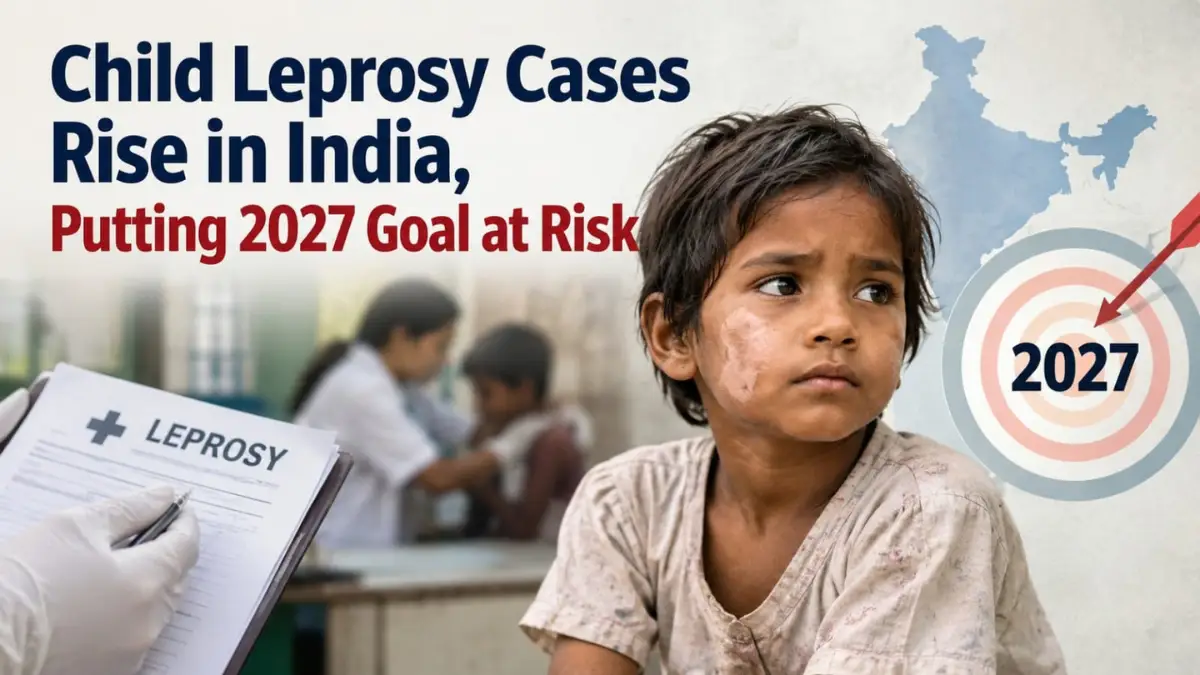
India is facing a significant public health challenge as the number of leprosy cases among the children continues to raise the concerns about the disease transmission, the early diagnosis and the effectiveness of the elimination efforts. According to the reported figures for the year 2025–26, India has recorded about 3,832 new leprosy cases among the children, which also includes the 37 cases related to the Grade-2 disability (G2D) at the time of the diagnosis. This caseload concerning the is 91.6% higher than the target of the National Leprosy Eradication Programme (NLEP), which is, 2,000 cases. These figures raise questions about the ability of India to interrupt the leprosy transmission and achieve its objectives that are set for the achievement for the year 2027.
Understanding the Rising Number of Child Cases
The leprosy, which is also known as the Hansen’s disease, is a chronic bacterial infection that is primarily caused by the “Mycobacterium leprae.” It primarily affects the skin and the peripheral nerves and can lead to a lasting disability if the diagnosis and the treatment are delayed.
The World Health Organization (WHO) considers the occurrence of new leprosy cases among the children below 15 years of age as an important indicator of the recent transmission. When the children develop the disease, it suggests that the transmission may still be occurring within the communities.
The 3,832 newly detected cases involving the children in India in the year 2025–26 therefore highlight the continuing public health burden due to the leprosy disease. Although detecting the cases is essential for the treatment and the disease control, the numbers also indicate the need to strengthen the prevention, the surveillance and the early diagnosis, particularly in the vulnerable and the underserved communities.
Grade-2 Disability: A Warning Sign of Delayed Diagnosis
One of the most concerning aspects of the reported figures is the detection of the Grade-2 disability in the 37 children, which refers to the visible deformities or the serious damage associated with the disese of leprosy, including the complications affecting the hands, the feet or the eyes.
The appearance of such a disability at the diagnosis indicates that the disease may have remained undetected for a considerable period. The early identification and the timely treatment can prevent many of these complications, making the disability among the newly diagnosed children an important indicator of the gaps in the healthcare access and the awareness programmes.
The wider national figures also underline this concern. India has reported a huge number of about 91,783 new cases of leprosy in the year 2025–26, with a prevalence rate of 0.56 cases per 10,000 population. Of these newly detected patients, about 1,945 had Grade-2 disability, which account for approximately 2.12% of all the new cases. The national Grade-2 disability rate stood at 1.34 per million population, which is above the targeted adopted under the NLEP, that is fewer than one case per million.
These figures demonstrate why the measurement of the success only through the number of cases detected is insufficient. The public health programmes must also focus on how early the patients are diagnosed and whether the disability can be prevented.
India’s Roadmap Towards 2027
The National Leprosy Eradication Programme has established the objectives which aimed at interrupting the transmission and reducing the burden of the disease. Its National Strategic Plan for the period between 2023 to 2027 seeks to achieve the zero transmission at the district level by the year 2027.
Under the roadmap, a district is considered to have interrupted the transmission after reporting the zero new indigenous child cases for the five consecutive years. The programme also seeks to achieve zero disability among the newly diagnosed children and reduce the national Grade-2 disability rate.
The roadmap projects 1,000 child cases and a Grade-2 disability rate of 0.5 per million for the year 2026–27. However, the reported child caseload of 3,832 in the period between 2025 to 2026 indicates that the substantial efforts will be required to meet these objectives.
The challenge is not simply to reduce the number of the reported cases but to ensure that the transmission is interrupted sustainably and that people affected by the leprosy disease receive the timely care.
Geographical Challenges and High-Burden Areas
The burden of leprosy is not evenly distributed across India. According to the report, the Union Health Ministry has identified the high-priority states, the districts and the hard-to-reach areas requiring the intensified surveillance and the effective case detection.
The identified districts include 23 in Chhattisgarh, 21 in Jharkhand, 18 each in Maharashtra and Odisha, and 10 in Madhya Pradesh. These districts recorded the prevalence rates above one case per 10,000 population.
The concentration of cases in these particular regions highlights the importance of the locally tailored interventions. The remote communities, the limited healthcare access, the inadequate awareness and the stigma associated with the leprosy disease can prevent the people from seeking the medical assistance at an early stage.
The active case detection, the household contact surveys and the focused awareness campaigns can help in the identification of the infections at an early stage. The special attention must also be given to the children and the families who may have the difficulty in accessing the healthcare services.
Tackling Stigma and Improving Awareness
The social stigma associated with this disease remains an another major obstacle to its control. The fear of discrimination may discourage the affected individuals and their families from disclosing the symptoms or seeking the medical attention.
The leprosy is curable with the multidrug therapy, and the early treatment can prevent the serious complications. The improvement in the public understanding of the disease is therefore essential to reduce fear, to encourage the timely diagnosis and to support the social inclusion of the affected people.
The schools, the community health workers, the local healthcare facilities and the public awareness campaigns can play an important role in educating the families about the early symptoms and the importance of completing the treatment.
Conclusion
The rising number of child leprosy cases presents a serious challenge to the targets that has been set by India for the year 2027 concerning the elimination of the leprosy as a disease. The 3,832 cases reported among the children in the year 2025–26, alongside 37 cases of the Grade-2 disability, underline the need for a stronger surveillance, an earlier diagnosis and a better access to the treatment facilities.
The success of India will depend on the sustained action in the high-burden districts, the effective household contact surveys, the public awareness and the efforts to eliminate the stigma. Most importantly, the country must ensure that no child develops the preventable disability due to the delay in the detection of the disease.
The achievement of the 2027 goal will require a shift from merely identifying the cases to interrupting the transmission and actually preventing the disability. The need of the hour is to strengthen the community-level healthcare and to ensure that every affected person receives the timely treatment, because on then can India be able to defeat the burden of the leprosy.