
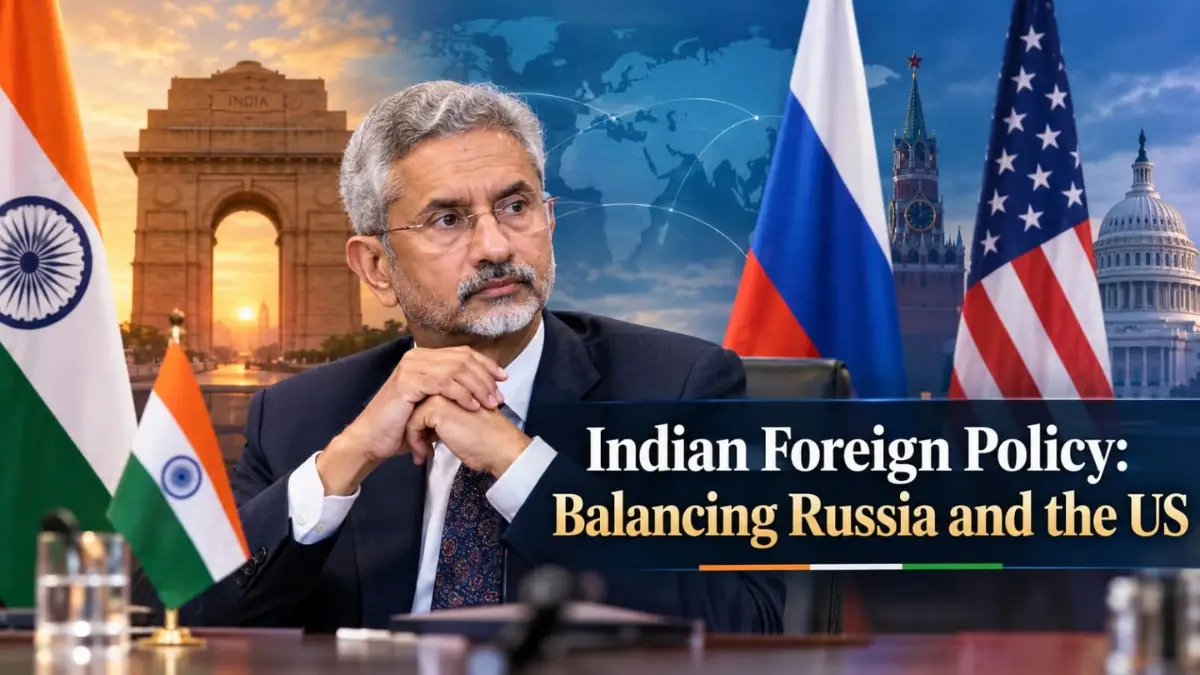
India has stepped up its diplomatic engagement with both the Russia and the Ukraine as it seeks to contribute to the efforts that are aimed at ending the prolonged conflict between these two countries. The External Affairs Minister S. Jaishankar has said that the New Delhi is moving “beyond advocacy” and is now involved in the conversations with both the Moscow and the Kyiv on the practical issues, including the maritime safety, the grain exports and the energy-related concerns.
While speaking at a German think-tank’s event, Mr S. Jaishankar has said that the close ties that have been maintained by India with the Russia have helped it to maintain the communication with the Moscow the during difficult times. At the same time, the New Delhi has also held the discussions with the Ukraine, while stressing the importance of the dialogue and the diplomacy in resolving the conflict.
According to Mr. S. Jaishankar, the approach that is being adopted by India is focused on addressing the immediate concerns as well as exploring the possibilities for a broader resolution. He referred to the involvement of India in the discussions over the safety of the shipping in the Black Sea, while also pointing to the concerns related to the exports of the grains and the energy supplies. These issues have the consequences that go well beyond the immediate region, making them very important for the global food and the energy security.
India’s balancing diplomacy
India has consistently maintained that the dialogue and the diplomacy are essential for resolving the Russia-Ukraine conflict. While New Delhi has strong the historical and the strategic ties with the Moscow, it has also maintained the diplomatic and the economic relations with the Kyiv and the western countries.
Mr. Jaishankar said that the India is having conversations with both the Russia and the Ukraine on the need for the dialogue and the diplomacy. He also highlighted the Prime Minister Narendra Modi’s recent engagement with the issue, suggesting that India is trying to play a constructive role for resolving the issues rather than simply advocating for the peace from the sidelines.
The minister also described the changing global balance of power. He argued that the the United States is becoming a “lonelier power”, while the China is increasingly presenting itself as a “unique country”. In this changing environment, the countries may need to develop the coalitions and the partnerships on the issues such as the international peace and the security.
Strong India-Russia ties
Despite the international pressure on the countries for maintaining the relations with the Moscow, India has indicated that it will continue its engagement with Russia. Mr. S. Jaishankar said the relationship of India with the Russia is based on the long-standing strategic and the security considerations.
He pointed to the historical support that has been provided by Russia to India from time to time, including the periods when the India was faced with the security challenges. He specifically referred to the support provided by the Soviet Union during the 1971 India-Pakistan war and the Bangladesh Liberation War.
Mr. Jaishankar also defended the continued purchase of Russian oil by India. The Russia currently accounts for a significant share of oil imports being made by India, and the minister indicated that the New Delhi would not reduce these purchases simply because of the external pressure.
He argued that the India and the Russia (or the Soviet Union earlier) had stood by each other at the important moments in history, particularly when the security and the territorial integrity of India were under threat.
Greater focus on maritime security
The diplomatic efforts that are being made by India are also accompanied by the closer security cooperation with the United States and the other Indo-Pacific partners.
Mr. Jaishankar recently met the Commander of the U.S. Indo-Pacific Command, named Admiral Samuel J. Paparo in the New Delhi. The meeting focused on the advancement of the India-U.S. security partnership and the strengthening of the maritime cooperation in the Indo-Pacific.
Mr. Paparo is on a five day visit to India from October 3 to 8 as the Washington has sought to deepen the military-to-military cooperation and advance the broader defence partnership between the two countries. The discussions covered the shared security priorities, including the maritime security, the domain awareness, the emerging technologies and the military interoperability.
The India and the United States, along with the Australia and the Japan, are also strengthening the cooperation through the Quad platform, with a free and an open Indo-Pacific remaining a key objective.
The parallel engagement with the Russia, Ukraine and the United States reflects th broader foreign-policy approach that is being adopted by India, that is, maintaining the strategic autonomy while expanding the partnerships with the different countries. The New Delhi appears keen to use its relationships with the major powers to protect its own interests while also contributing to the efforts to address the global security and the economic challenges.
For India, the challenge is to maintain these diverse relationships without being drawn into the rival geopolitical camps. The remarks made by M. S. Jaishankar, therefore indicate that the New Delhi intends to continue to pursue the dialogue, the diplomacy and the practical cooperation with all the sides.