
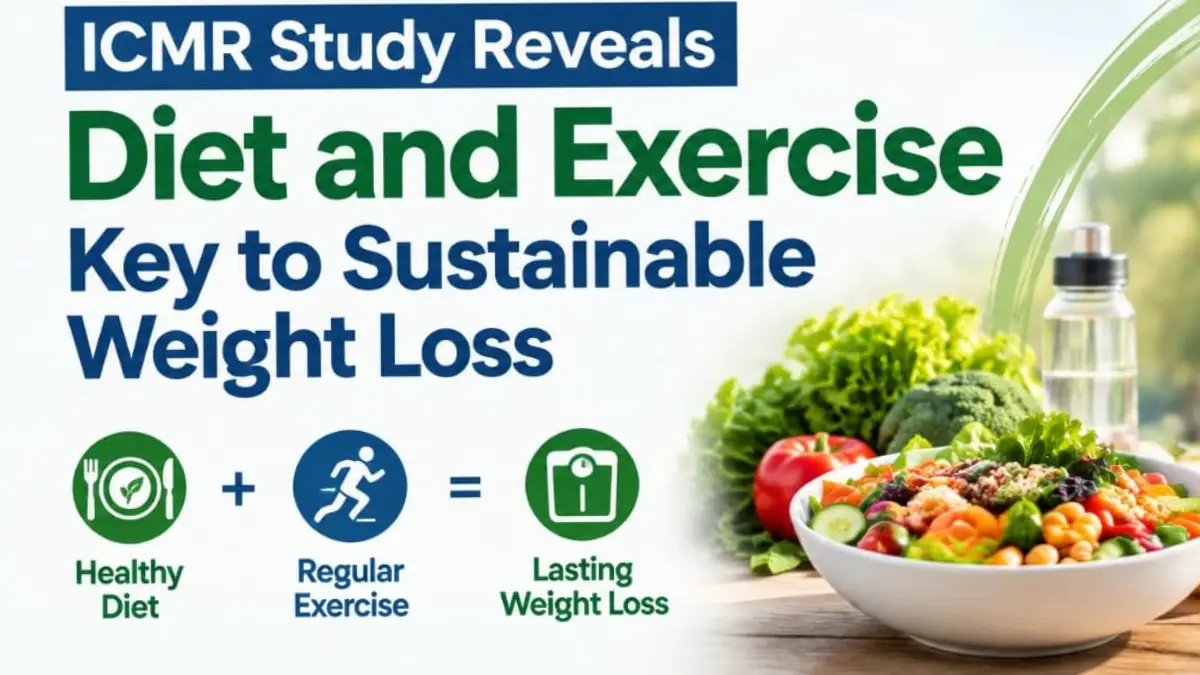
A major review led by the researchers from the Indian Council of Medical Research (ICMR) and the National Institute of Nutrition (NIN) has highlighted a simple but an important message for the people who are trying to manage their weight, that a combination of a healthy diet and the regular physical activity is more effective for achieving and maintaining the long-term weight loss than relying solely on either approach alone. The findings, published in the international journal, the Obesity Pillars, are based on an extensive umbrella review of the scientific evidence. The researchers analysed the findings from 112 systematic reviews and the meta-analyses, covering the 2,332 randomised controlled trials which involved more than 5.07 lakh participants across the 50 participating countries. The study, led by ICMR-NIN scientists Mahesh Kumar Mummadi and Samarashima Reddy, examined the impact of the dietary interventions, the physical activity, the lifestyle changes and the combined approaches on the weight management and the cardiometabolic health.
Combined Approach Delivers More Sustained Results
The researchers found out that the major non-pharmacological interventions produced the statistically significant improvements in the management of the weight and the Body Mass Index (BMI). However, the effects were generally modest when the individual interventions were considered separately. The strongest and the most sustained results were observed when the dietary changes were combined with the physical activity. The participants following this combined approach lost an average of 3.68 kg more than the control groups beyond the 12 months. This finding is particularly important because maintaining the weight loss over a long period of time is often more difficult than losing the weight initially. The short-term diets may produce the visible results, but a sustainable weight management usually requires the long-term changes in the eating habits and the physical activity. The study therefore reinforces the idea that the weight management should not be viewed simply as a matter of eating less. A comprehensive lifestyle approach involving the nutritious food choices and a regular movement can provide the greater and the more lasting benefits for a healthy living.
Low Calorie Diets Show Strong Short Term Benefits
The review also found that the low-calorie diets were among some of the most effective approaches for the short-term weight loss. The participants following such diets have experienced an average reduction of 2.64 kg within the first three months. Elsewhere, the benefits of physical activity alone were comparatively smaller in terms of immediate weight reduction. Importantly, the researchers observed that the benefits of the physical activity increase over the longer follow-up periods. This suggests that the regular exercises may play a particularly important role in maintaining the improvements over time rather than producing the dramatic weight loss within a few weeks. The regular physical activity can also contribute to the improvements in the fitness, the metabolic health and the overall wellbeing, even when the changes on the weighing scale appear limited.
Benefits Extend Beyond Body Weight
One of the important aspects of the study is that it looked beyond the weight and the Body Mass Index. The researchers also assessed the cardio-metabolic health indicators, including the blood sugar control. The combination of the diet and the physical activity produced the greatest benefits in the blood sugar control, demonstrating that the lifestyle interventions can have the advantages beyond simply reducing the body weight. The better regulation of the blood sugar level is particularly relevant because the excess weight and the unhealthy lifestyles are associated with an increased risk of the metabolic disorders. The lifestyle modifications can therefore form an important part of the strategies aimed at improving the overall health.
A Sustainable Strategy for Weight Management
The findings offer a practical lesson that there is no single magic solution for the long-term weight management. The crash diets or the isolated interventions may produce the short-term changes, but the sustainable results are more likely when the healthy eating and the nutritious food is combined with the regular physical activity. A balanced dietary pattern can help in managing the calorie intake and in improving the nutritional quality, while the physical activity can support the energy expenditure and improve the physical fitness. Together, these approaches can create a more comprehensive strategy for managing the weight and the metabolic health. The large international evidence base examined by the ICMR-NIN researchers also strengthens the significance of the findings. With the thousands of randomized trials and the participants from 50 countries included in the analysis, the review provides a broad evidence supporting the combined lifestyle interventions. Ultimately, the study reinforces a straightforward message for the long-term health that the healthy eating and the regular physical activity work best when they are treated as complementary parts of the same lifestyle rather than the separate weight-loss strategies. For the people seeking the sustainable weight management, the consistency and the long-term lifestyle changes may matter far more than the quick fixes.