
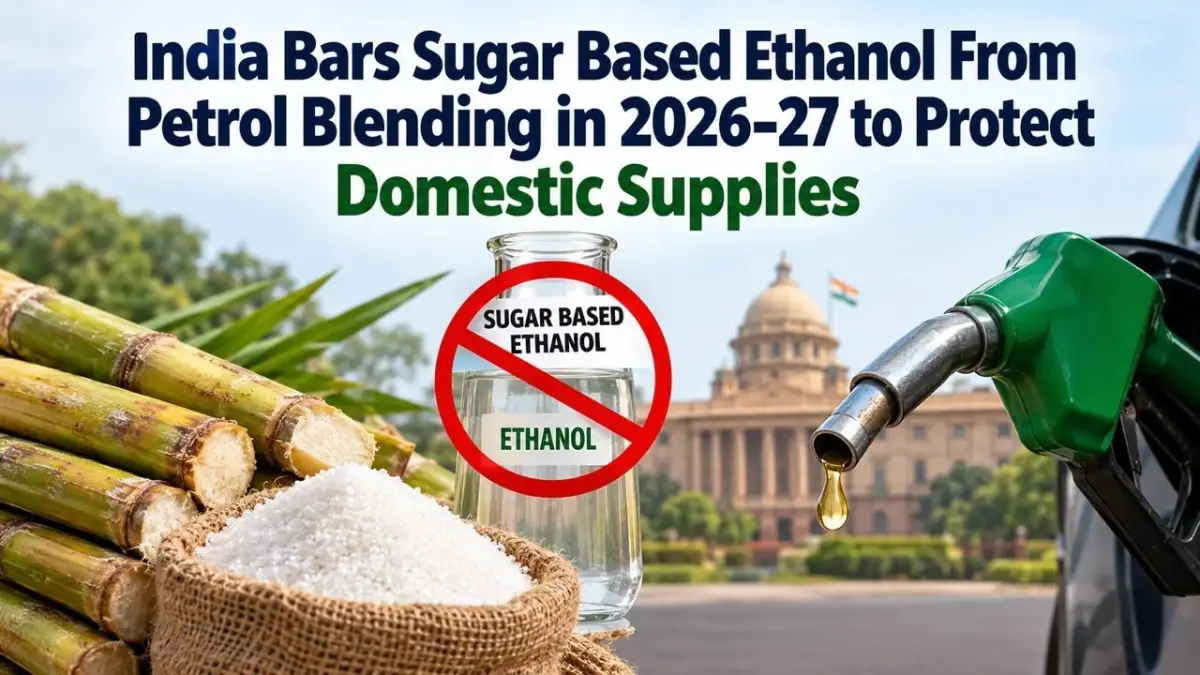
The government-run oil marketing companies of India have excluded the sugar-based ethanol from their procurement plans for the year 2026–27, thereby reflecting the growing concerns over the domestic availability of the sugar, the rising prices and the impact of the poor rainfall in the major states that are known for the production of the sugar. The decision is taken with the intention to safeguard the supplies of the food for consumption while allowing the country to continue its ethanol-blending programme through the alternative feedstocks or other grains.
According to a report by the Press Trust of India (PTI), the Bharat Petroleum Corporation Limited (BPCL), on the behalf of the oil marketing companies (OMCs), has issued a tender for the procurement of approximately 11 billion litres of the ethanol on October 16 for the supply year that will begin in the November 2026. The tender directs that the diversion of the sugar for the production of the ethanol should be reduced to zero during the 2026–27 supply year.
Sugar Based Ethanol Excluded From Procurement
Under the revised conditions for the procurement, the oil companies will not accept the offers for the ethanol produced from the sugarcane juice, the sugar syrup or the B-heavy molasses. These feedstocks have traditionally contributed to the ethanol supply of India, along with the grain-based alternatives.
The decision marks a significant shift in the strategy for sourcing the ethanol that is used in the blending of petrol. By restricting the diversion of the sugarcane products towards the production of fuel, the government aims to maintain the sufficient supply of sugar for domestic consumption and limit the upward pressure on the price of sugar.
The move comes amid the concerns about the lower output of sugar following the inadequate rainfall in the key producing states, particularly Maharashtra and Karnataka. The reduced prospects for the production have increased the importance of preserving the available sugarcane resources for the food-related uses.
Greater Focus on Grain Based Ethanol
Although the sugar-based ethanol has been excluded from the latest tender, the government continues to support the ethanol blending through alternative agricultural feedstocks. The tender permits the bids for the ethanol that is produced from the maize, the broken rice, the surplus rice supplied through the Food Corporation of India (FCI), and the C-heavy molasses.
The policy is expected to increase the importance of the grain-based ethanol for meeting the fuel-blending requirements of India. However, the transition could also create challenges for the producers, particularly those whose operations depend heavily on the raw materials that are derived from the sugarcane.
To encourage the use of the grain-based ethanol, the procurement price for the maize-based ethanol has been reduced to ₹68.86 per litre from ₹71.86 per litre. The incentive for the ethanol produced from the maize has also been lowered to ₹2.79 per litre from ₹5.79, according to the report.
These changes could affect the returns for the suppliers of maize and the manufacturers of the ethanol. At the same time, the greater reliance on the grain-based production may increase the competition for the agricultural commodities that are used for the food, the animal feed and the industrial purposes.
Balancing Energy Security and Food Availability
India is one of the largest sugar consumers of the world and it remains heavily dependent on the imported crude oil to meet its energy requirements. The ethanol blending is an important component of the strategy of India to reduce its oil imports, lower the emissions and diversify its fuel supply.
The nationwide programme has promoted the blending of ethanol with petrol, with E20 petrol containing up to 20% of ethanol and this has been adopted as a key standard. The expansion of the domestic production of ethanol can help in reducing the volume of the fossil fuels consumed by the vehicles.
However, the latest decision highlights the challenges that are involved in balancing the security of energy with the availability of food. The diversion of the sugarcane products towards the production of ethanol can reduce the quantity available for the manufacturing of sugar, particularly when the agricultural output is constrained.
Challenges Ahead for the Ethanol Industry
The exclusion of the sugar-based feedstocks is likely to reshape the procurement and production decisions across the ethanol industry during the 2026–27 supply cycle. The grain availability, the procurement prices, the distillery capacity and the economics of the alternative feedstocks will play a crucial role in determining whether the producers can meet demand or not.
The government must also ensure that the shift towards the grain-based ethanol does not place excessive pressure on the food and feed markets.
Ultimately, the policy reflects an effort made by the government to maintain the ethanol-blending ambitions of India without compromising on the domestic supply of sugar. Its success will depend on the availability of the alternative raw materials, the efficient procurement and the ability of the ethanol producers to adapt to the changing market conditions.