
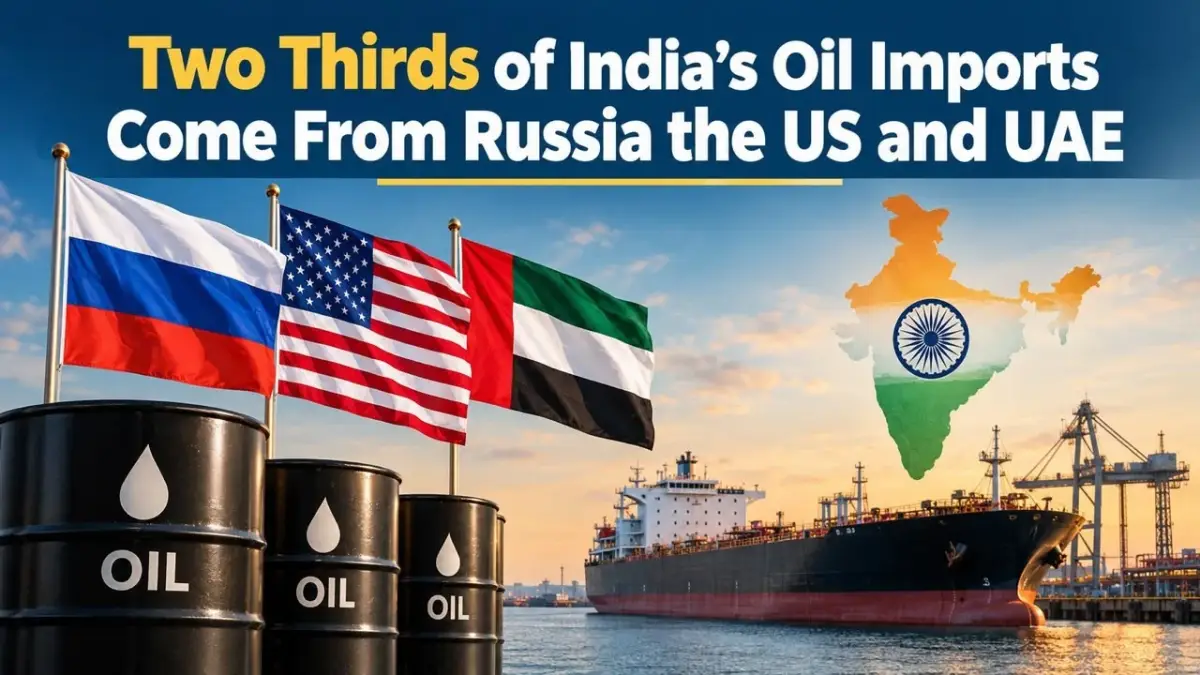
India is dependent on a small group of countries for its crude oil imports, with Russia, the United States and the United Arab Emirates (UAE) collectively accounting for more than two-thirds of the oil imports made by India in August 2026. This development highlights the evolving energy trade patterns amid the changing global prices, the geopolitical tensions and the efforts made by India to diversify its supply sources.
According to the figures reported by The Hindu Business, the combined share of these three countries reached approximately 66.85% of the crude oil imports made by India, marking an all-time high. The trend reflects the growing concentration of the oil procurement of India among a limited number of suppliers, even as the country continues to adjust its sourcing strategy in response to the conditions prevalent in the international market.
Russia Remains India’s Largest Oil Supplier
Russia has continued to account for the largest share of the oil imports of India in August 2026, despite a decline from its previous peak. The Russian oil made up approximately about 44.5% of total oil imports made by India during the month, that is equivalent to around 84.8 lakh tonnes.
However, the share of Russia has declined from a historic high of 51% that had been recorded in July. The reduction indicates a shift in the composition of the oil purchases made by India, with the supplies from the other countries gaining importance.
The report also noted that the crude oil imports made by India from Russia were lower in the month of August than in July and the corresponding period last year. The changes in the procurement volumes and the relative cost of the supplies may have contributed to this movement.
US Oil Imports Rise Sharply
The imports from the United States have recorded a substantial increase during August, thereby further strengthening the country’s position among the major oil suppliers of India. The US oil imports have reached approximately 9.7 lakh tonnes, that account for around 5.1% of the total imports made by India for the month.
This volume was significantly higher than in July and more than 130% above the level recorded in August last year and this increase suggests that the American crude has become a more prominent component of the import basket of India.
Nevertheless, the US crude oil was purchased at a significantly higher price than the average cost of the Indian oil imports. India paid an average of approximately $810.6 per tonne for American oil, compared with an average price of around $640 per tonne for its overall crude oil imports in August. This difference highlights the cost implications of the changing suppliers and the importance of balancing the supply security with affordability.
UAE Strengthens Its Position
The United Arab Emirates has also recorded an increase in its contribution to the oil imports made by India. According to the report, the UAE supplied approximately 3.3 lakh tonnes of the oil in August, accounting for 17.4% of the total oil imports and 16.9% of the overall import bill of India.
The rise in the supplies from the UAE, alongside the increased American imports have contributed to the combined share of the three countries reaching its record level. The UAE remains an important source because of its established energy trade links with India and its position in the Gulf region.
Geopolitical Risks and Energy Security
The concentrated dependence of India on these three suppliers comes at a time of the continuing uncertainty in the international energy markets. The geopolitical tensions, the trade policies and the possible restrictions on the Russian energy exports could influence the future procurement decisions that will be made by India.
The report has highlighted the concerns surrounding the move of the US President Donald Trump that was made in September move to introduce the legislation that could allow the tariffs of up to 100% on the countries that import the significant quantities of the Russian oil and the gas. Such measures, if implemented, could create an additional uncertainty for the energy trade of India.
As one of the major oil-consuming nations of the world, India relies heavily on the imports to meet the domestic demand. Consequently, the changes in the global prices or the disruptions involving the major suppliers can affect its import bill, the inflation and the broader economic stability.
Diversification Remains Important
The record concentration of the oil imports underlines the need for India to maintain a flexible and a diversified energy procurement strategy. While purchasing from the established suppliers can provide the commercial advantages, the excessive dependence on a limited number of countries may expose the economy to the geopolitical and the supply-related risks.
The future approach of India will likely require balancing the competitive prices, the reliable deliveries and the diplomatic considerations and the expansion of the access to the alternative suppliers, proper monitoring of the international developments and the improvisation of the energy efficiency could help in reducing the vulnerabilities.
The increasing reliance on the Russia, the United States and the UAE for the crude oil imports highlights the evolving dynamics of energy trade of India and its dependence on the key global suppliers. Whether this concentration continues will depend on the international prices, the geopolitical developments and the efforts of India to secure an affordable and the dependable energy supplies.